
ABOUT
Our Mission

Our Mission is Crystal Clear:
- Make learning AI enjoyable!
- Eliminate fear!
- Use AI ethically!
- Empower individuals of all ages to excel with AI at work, school, and in their personal lives!
- Provide Subject Matter Expertise to Advanced Manufacturing Clients
- Have fun!
Our Mission
At Schilling AI & Engineering Services, PLLC, we deliver innovative AI solutions that will change the way business is done. By combining deep engineering expertise with the latest advancements in artificial intelligence, our team enables organizations in finance, healthcare, architectural engineering consulting, construction, and manufacturing to achieve unmatched efficiency, accuracy, and innovation.
In the finance sector, we develop intelligent models that enhance risk assessment, automate reporting, and support smarter investment decisions. Healthcare AI solutions from us empower care providers with powerful diagnostic support, workflow optimization, and improved patient outcomes based on data-driven insights.
We design AI systems for architectural engineering and construction firms that make project planning more efficient, reinforce the accuracy of designs to cut down costly mistakes, and make each stage more predictable and productive. For production, our automation and predictive analytics gear reduce unplanned downtime, improve satisfactory control, and modernize manufacturing traces to gain maximum overall performance.
What sets us aside is our dedication to providing customized, reliable, and scalable AI structures tailored in your business desires. We do greater than just offer technology; We offer answers that will help you continue to be aggressive in a hastily evolving market.
Partner with Schilling AI and Engineering Services, PLLC to liberate a destiny pushed by means of better operations, stronger overall performance, and innovation.
Our Team

Ted Schilling, PC CEM MBA
AI and Advanced Manufacturing Facility Expert
Key Accomplishments:
- Led the implementation of regenerative AI tools within the Real Estate and Facilities (REF) organization, enhancing capabilities with existing resources. Developed six case studies that set engineering standards for asset management and system construction, improving task development efficiency by 80%.
- Successfully managed and delivered over 20 semiconductor manufacturing fabrication facilities and datacenters, driving both new constructions and expansions.
- Served as Chair, Keynote, and Invited Speaker at various prestigious forums, including:
- “Industry 4.0 Key Technologies” at the KeyNotion Smart Manufacturing World Summit, San Francisco, CA.
- “Integration of AI into Mission Critical, High Volume Manufacturing Facilities” and “How to Develop and Implement a High Performing Team” at the KeyNotion Operational Excellence and Business Transformation World Summit, Miami, FL.
- “AI Integration to Achieve Operational Excellence” at the World Pricing Digital OPEX APAC: OPEX in the Age of Technology, Penang, Malaysia, and the National University of Singapore.
- Developed and executed AI strategies that aligned with corporate visions, reducing project completion schedules by 60%.
- Led a diverse team of AI professionals, fostering a culture of technological innovation and excellence.
- Established strategic partnerships and represented his company in key industry forums, enhancing visibility and leadership in the AI domain.
- Published book on navigating incentives and grants for public and private organizations

Christopher Lundy
Senior Principal Enterprise Architect | AI & Quantum Computing Innovator | Strategic Leader in Digital Transformation
Key Accomplishments:
- Leading the design and architecture of a $500 million biopharma manufacturing facility.
- Driving the transformation of Columbia Sportswear’s infrastructure, enabling a $3 billion platform.
- Developing enterprise-wide AI processes and large-scale cloud solutions at Pfizer.
- Recognition as an industry innovator with multiple awards for digital strategy and innovation.
- Extensive contributions to research and development in quantum computing and AI, including the introduction of the Quantum Neural Network (QNN).

Joseph Duren Lopez
AI Construction Project Management Leader | AI Implementation Specialist | Automation Pioneer
Key highlights of my career include:
- Automating project administration at Pfizer by implementing automation tools for over 700 projects in 2 years, significantly improving efficiency and reducing overhead costs.
- Spearheading the integration of AI solutions across more than 30 projects at Weigh Anchor, improving speed of delivery, quality, and cost controls.
- Developing Construction Copilot, an innovative AI-powered assistant for construction management, which has been utilized by over 5,000 users and maintains a 4.3-star rating.
- Recognition as an industry innovator with multiple awards for digital strategy and innovation.
- Founding and leading Weigh Anchor, a tech-forward construction project management firm that leverages cutting-edge technologies including AI and automation to drive innovation in the industry.

En Lammers
Communications Counsel
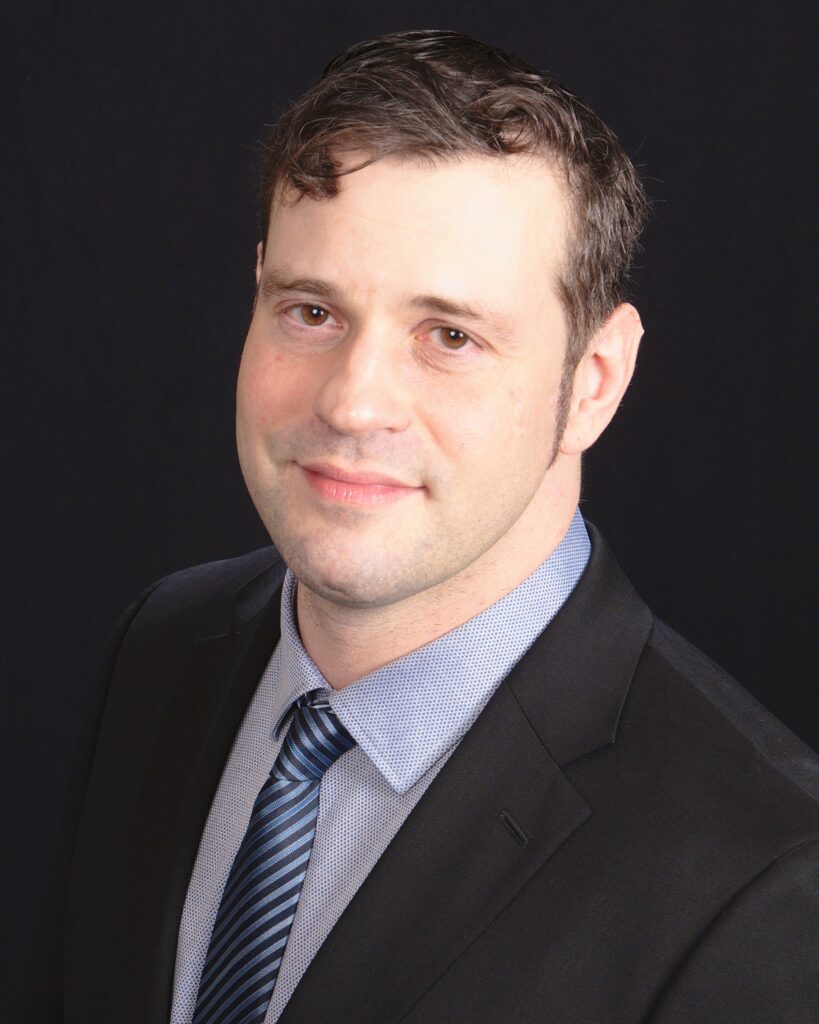
Max Bareither
AI Cybersecurity Engineer | Agentic Identity & Access Architect | Enterprise IAM-to-Agent Trust
Max Bareither is an AI cybersecurity engineer who brings something rare to the agentic-AI era: more than two decades of enterprise identity and access management experience, now applied to the hardest emerging problem in the field — how to let autonomous AI agents act safely. As architecture, engineering, and construction (AEC) firms move from chat-based assistants to AI agents that call APIs, use tools, and execute multi-step workflows, the identity and access controls built for human users no longer fit. Max designs the trust infrastructure that closes that gap, defining how an AI agent proves who it is, what it is permitted to do, and on whose behalf it is acting — so automation can scale across engineering and project-delivery systems without expanding the attack surface.
That work rests on a deep foundation. Across regulated industries — energy and utilities, banking, healthcare, insurance, higher education, and government — Max has architected enterprise identity programs spanning identity governance and administration (IGA), privileged access management (PAM), access certification, role-based access control (RBAC), federation, single sign-on, and multi-factor authentication. He implemented a privileged access management program for a major North American energy and utilities company, securing the credentials behind critical infrastructure operations, and has led identity governance rollouts onboarding hundreds of mission-critical applications and cleansing identity data for well over a hundred thousand users under aggressive audit deadlines. His programs have repeatedly satisfied demanding compliance regimes — SOX, HIPAA, GDPR, PCI, FFIEC, and others — giving him a practical, audit-tested command of the governance and least-privilege disciplines that secure AI now urgently requires.
Max pairs that identity heritage with hands-on AI engineering. He has architected and deployed production LLM and multi-agent systems on cloud-native, serverless infrastructure: a document-intelligence platform using managed retrieval-augmented generation (RAG) services to automate ingestion of complex technical and contractual documents at enterprise scale, a multi-agent procurement-optimization framework, and a graph-based agentic system for automated regulatory-compliance mapping. In each, security and identity were engineered in from the foundation — least-privilege access, scoped execution roles satisfying organization-level governance policies, agent credential vaulting, and tool-level authorization controls — rather than retrofitted.
Where most teams are only beginning, Max has already done the work of extending identity to non-human actors. On a production multi-agent system he progressively hardened authorization from coarse OAuth/RBAC toward fine-grained, dynamic authorization, and he has designed credential brokering, scoped tokens, delegation, and tool-gateway policy controls for AI agents. He approaches these systems with an adversarial mindset, performing attack-path analysis and threat modeling against the failure modes specific to agents — prompt injection, tool misuse, unsafe delegation, data exfiltration, and unauthorized expansion of an agent’s privileges mid-workflow — and he pairs every system with end-to-end observability and structured audit logging so that agent actions, tool calls, and credential usage remain traceable and defensible. He designs toward the identity and access standards that underpin trustworthy agentic systems — OAuth 2.0/2.1 and OIDC for delegated authorization, SCIM for identity lifecycle and provisioning, SPIFFE for workload identity, AuthZen for fine-grained authorization, and certificate lifecycle and secrets management — alongside emerging agent-protocol standards such as the Model Context Protocol (MCP).
Within the AEC context, this protects what these firms can least afford to lose: intellectual property in drawings, models, and specifications; confidential bid and contract data; and the integrity of the AI copilots and project-management agents now making real decisions on real projects. Max designs secure “paved-road” patterns that let engineering and construction teams adopt agentic AI safely — ensuring a scheduling agent cannot reach privileged financial data, a design-review model cannot be manipulated into leaking proprietary work, and an automated document workflow cannot become an exfiltration channel — while bringing the same compliance discipline that satisfied auditors in banking and healthcare to the contractual and regulatory standards the construction industry demands.
Max pairs hands-on engineering with deep analytical rigor. He teaches graduate courses — spanning probability, simulation-based inference, and regression — in the University of Texas at Austin’s highly regarded MSAI (Master of Science in Artificial Intelligence) program, building on a magna cum laude background in mathematics and physics. A polyglot engineer who selects the right language for each job across AI workloads and cloud-native infrastructure, he is fluent at framing an ambiguous problem, prototyping the highest-value solution quickly, and evolving it into a reliable production system.
Key Accomplishments
- Architected enterprise identity and access programs across energy/utilities, banking, healthcare, and insurance, including a privileged access management (PAM) implementation for a major North American energy and utilities company.
- Hardened a production multi-agent AI system’s authorization model from coarse OAuth/RBAC to fine-grained, dynamic authorization, and designed credential vaulting and tool-level policy controls for autonomous agents.
- Architected and delivered an AI-native document-intelligence platform on managed RAG services, reaching [95–100%] field-level accuracy across [eight] product lines with a [71]-test automated validation suite, secured with least-privilege access and structured audit logging.
- Led identity governance rollouts onboarding [100+] mission-critical applications and cleansing identity data for [100,000+] users under aggressive audit deadlines, satisfying SOX, HIPAA, GDPR, and PCI requirements.
- Applies modern identity and access standards relevant to agentic security — OAuth 2.0/2.1, OIDC, SCIM, SPIFFE, AuthZen, and certificate lifecycle management — to credential brokering, delegation, and workload-identity design for AI agents.
- Implemented end-to-end observability and audit logging for agentic pipelines, enabling traceability of agent actions, tool calls, and credential usage for incident investigation and compliance.
- Teaches graduate courses in UT Austin’s highly regarded MSAI program, bringing formal statistical rigor to AI risk assessment and threat quantification.
By uniting two decades of enterprise identity architecture with hands-on AI engineering and an adversarial security mindset, Max helps AEC organizations deploy autonomous AI they can actually trust — capturing the speed and insight of agentic systems without inheriting the risk. He is a valuable asset to any firm building the trust infrastructure that secure AI demands.